
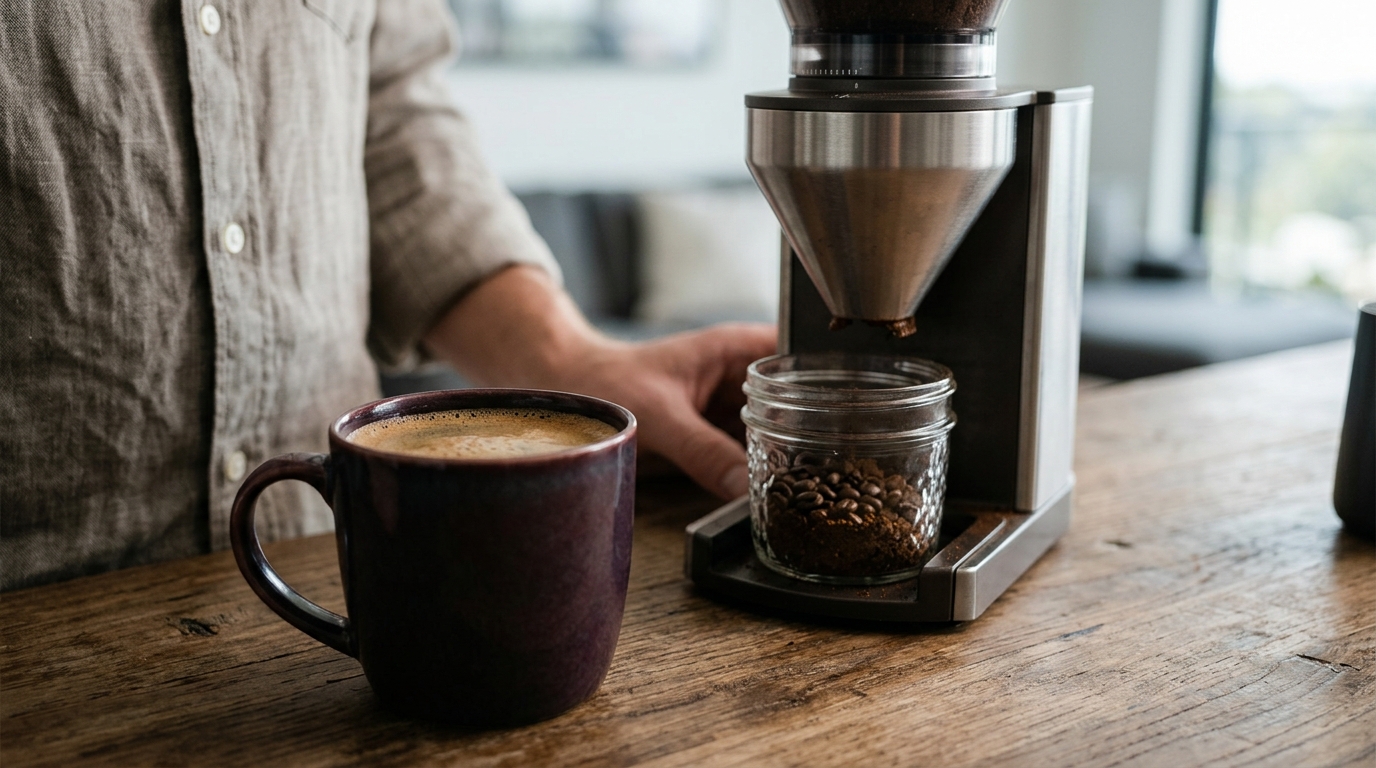
The global coffee industry generates billions in revenue annually, yet a significant portion of that value is lost before the first sip is taken. According to data from the Specialty Coffee Association, up to 60% of coffee's flavor compounds are lost within 15 minutes of grinding. This statistic highlights a critical gap in the daily routine of millions of consumers who prioritize convenience over quality. When you choose whole bean coffee, you are not just buying a product; you are investing in the preservation of volatile aromatic oils and complex chemical structures that define a premium cup. This guide explores why performance-driven individuals and connoisseurs alike are returning to the source, examining the tangible benefits of freshness, flavor integrity, and long-term cost efficiency.
The Science of Freshness and Oxidation
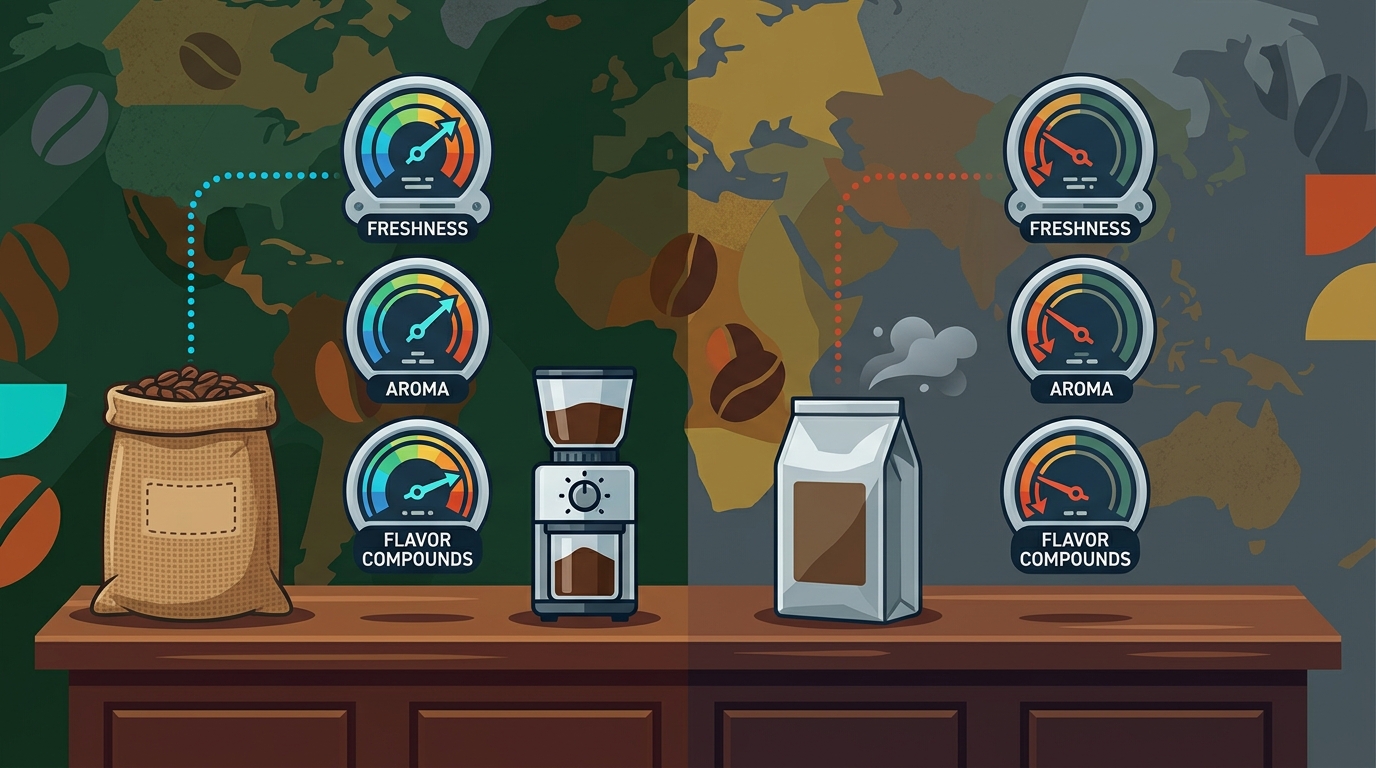
Coffee beans are essentially dried seeds that contain a complex matrix of carbohydrates, proteins, and lipids. When these beans are roasted, they undergo a chemical transformation that creates hundreds of aromatic compounds. However, this process also makes the beans highly susceptible to oxidation. Once the bean is cracked open during grinding, the surface area exposed to oxygen increases exponentially. This exposure triggers a rapid degradation of the essential oils that carry the coffee's unique aroma and taste.
Whole bean coffee preserves these oils until the moment of brewing. By grinding only what you need, you ensure that the volatile compounds remain intact. This is particularly important for high-performance individuals who rely on the specific chemical profile of their morning fuel. The difference between a bean ground hours ago and one ground seconds before brewing is not just subtle; it is chemically significant. Research indicates that the rate of staling in ground coffee is approximately 100 times faster than in whole beans. This means that the coffee you brew from whole beans retains a potency and clarity that pre-ground coffee simply cannot match.
For those seeking a functional approach to their caffeine intake, freshness is paramount. The integrity of the bean ensures that the caffeine delivery and accompanying nootropics, if present, are consumed in their most potent form. This is why many athletes and executives are shifting away from standard instant options to explore the nuances of whole bean coffee for their daily routines.
Unlocking Complex Flavor Profiles
One of the most immediate benefits of whole bean coffee is the depth of flavor it offers. Coffee is the second most traded commodity in the world, and its flavor profile is dictated by soil composition, altitude, and processing methods. When beans are ground prematurely, these delicate nuances are flattened by oxidation and the release of stale gases.
By grinding beans fresh, you unlock a spectrum of flavors that range from bright citrus notes to deep chocolate undertones. This complexity is often lost in mass-produced ground coffee, which is frequently blended to mask defects or stale flavors. Freshly ground coffee allows the natural acidity and sweetness of the bean to shine through. This is not merely a matter of taste; it is a matter of sensory experience. The aroma alone, which accounts for a significant portion of perceived flavor, is vastly superior when the beans are ground immediately before extraction.
Furthermore, the ability to control the grind size allows you to tailor the extraction process. A finer grind increases surface area and extraction speed, while a coarser grind slows it down. This control is essential for bringing out the best in different roast levels. For example, a light roast benefits from a slightly coarser grind to preserve its fruity notes, while a dark roast may require a finer grind to balance its bitterness. This level of customization is impossible with pre-ground coffee, which is typically optimized for a single brewing method.
Cost Efficiency and Long-Term Value
While the upfront cost of whole bean coffee might appear higher than that of pre-ground alternatives, the long-term value is undeniable. Pre-ground coffee often contains lower-quality beans that are blended to compensate for the loss of flavor during storage. In contrast, whole bean coffee allows you to purchase high-grade, single-origin beans that offer a superior taste experience per ounce.
Additionally, buying in bulk reduces the cost per serving. Many premium roasters offer subscription models that deliver fresh beans directly to your door. This ensures that you are always consuming coffee at its peak freshness, eliminating the waste associated with buying large bags of pre-ground coffee that go stale on your shelf. The efficiency of this model is supported by the growing trend of direct-to-consumer coffee sales, which have seen significant growth in recent years as consumers prioritize quality over convenience.
For those interested in functional benefits, the coffee category at STRONG Coffee Company offers options that combine the freshness of whole beans with the performance benefits of adaptogens and collagen. This approach maximizes the value of every cup by enhancing both the sensory and physiological outcomes.
Brewing Versatility and Control
Whole bean coffee is the foundation of brewing versatility. Whether you prefer the clarity of a pour-over, the intensity of an espresso, or the richness of a French press, the grind size is the critical variable that determines success. Pre-ground coffee is a compromise, designed to work "well enough" with multiple methods, but it rarely excels at any single one.
By grinding your own beans, you can adjust the grind to match your brewing equipment. This ensures optimal extraction, preventing under-extraction (sourness) or over-extraction (bitterness). This control is particularly important for those who experiment with different brewing techniques. For instance, a cold brew requires a coarse grind to prevent over-extraction during the long steeping process, while an espresso demands a fine grind to create the necessary pressure for extraction.
This versatility extends to the types of coffee you can explore. Whole bean coffee allows you to experiment with different origins, roast levels, and processing methods. You can discover the unique characteristics of a Ethiopian Yirgacheffe or a Colombian Supremo in a way that pre-ground coffee cannot facilitate. This exploration is a key part of the coffee enthusiast's journey, offering a deeper appreciation for the craft and science behind every cup.
Shelf Life and Storage Advantages
One of the most practical benefits of whole bean coffee is its extended shelf life. When stored correctly in an airtight container away from light and heat, whole beans can maintain their freshness for several weeks. In contrast, pre-ground coffee begins to stale almost immediately after packaging. This longevity allows you to buy in larger quantities without worrying about the coffee losing its quality.
Proper storage is key to maximizing this benefit. The Strong Words blog offers insights into maintaining the integrity of your coffee, including tips on avoiding common storage mistakes. By keeping your beans in a cool, dark place, you can preserve the volatile compounds that contribute to flavor and aroma. This is particularly important for those who purchase specialty beans, which are often more delicate and prone to staling.
Furthermore, the ability to grind only what you need reduces waste. You are less likely to discard a bag of coffee that has gone stale because you are consuming it at its peak. This efficiency is not only economically beneficial but also environmentally friendly, as it reduces the amount of coffee waste generated by households.
Whole Bean vs. Ground Coffee Comparison
To fully understand the benefits of whole bean coffee, it is helpful to compare it directly with pre-ground alternatives. The following table outlines the key differences across several critical dimensions.
| Feature | Whole Bean Coffee | Pre-Ground Coffee |
|---|---|---|
| Freshness | Preserved until grinding | Degraded rapidly after packaging |
| Flavor Complexity | High, nuanced profiles | Flattened, uniform taste |
| Grind Control | Customizable for any brew method | Fixed, generic grind size |
| Shelf Life | Weeks when stored properly | Days to weeks, depending on packaging |
| Cost Efficiency | Higher long-term value | Lower upfront cost, higher waste |
As the table illustrates, whole bean coffee offers superior performance across almost every metric. While pre-ground coffee offers convenience, it does so at the expense of quality and longevity. For those who value the experience and benefits of their coffee, the investment in whole bean is well worth it.
Key Takeaways
- Freshness Preservation: Grinding beans immediately before brewing preserves volatile aromatic oils that are lost within minutes of grinding.
- Flavor Integrity: Whole bean coffee allows for the full expression of complex flavor profiles, which are often masked in pre-ground alternatives.
- Brewing Control: Customizable grind sizes enable optimal extraction for various brewing methods, from espresso to cold brew.
- Cost Efficiency: Buying whole beans in bulk and grinding as needed reduces waste and offers better long-term value.
- Extended Shelf Life: Properly stored whole beans maintain freshness for weeks, compared to the rapid staling of ground coffee.
- Functional Benefits: Fresh coffee ensures the potency of any added nootropics or adaptogens, supporting peak performance.
- Quality Assurance: Whole bean coffee allows consumers to verify the origin and roast date, ensuring a higher standard of quality.
Frequently Asked Questions
Is whole bean coffee actually fresher than ground coffee?
Yes, whole bean coffee is significantly fresher. Once coffee is ground, it begins to oxidize and lose its aromatic compounds rapidly. Grinding just before brewing ensures that you are consuming the coffee at its peak flavor and potency.
Does whole bean coffee taste better?
Most coffee experts agree that whole bean coffee tastes better because it retains the essential oils and complex flavors that are lost during the pre-grinding and storage process. The freshness allows for a more nuanced and enjoyable cup.
How long does whole bean coffee stay fresh?
When stored in an airtight container away from light and heat, whole bean coffee can stay fresh for several weeks. However, for the best flavor, it is recommended to consume it within two to four weeks of the roast date.
Can I use whole bean coffee for all brewing methods?
Yes, whole bean coffee is the most versatile option. By adjusting the grind size, you can optimize the coffee for any brewing method, including drip, pour-over, French press, and espresso.
Is whole bean coffee more expensive?
While the initial cost may be higher, whole bean coffee is often more cost-effective in the long run. You can buy in bulk, reduce waste, and enjoy a higher quality product that lasts longer than pre-ground alternatives.
What is the best way to store whole bean coffee?
Store whole bean coffee in an opaque, airtight container at room temperature. Avoid storing it in the refrigerator or freezer, as moisture and temperature fluctuations can degrade the quality of the beans.
Why do performance-driven people prefer whole bean coffee?
Performance-driven individuals often prefer whole bean coffee because it offers a more consistent and potent caffeine delivery. The freshness ensures that the coffee's functional benefits, including any added adaptogens or nootropics, are fully realized.
Start Your Journey with STRONG Coffee
Transitioning to whole bean coffee is a step toward optimizing your daily performance and sensory experience. At STRONG Coffee Company, we provide premium whole bean coffee options designed for those who demand the best. Our beans are carefully selected and roasted to preserve their integrity, ensuring that every cup delivers maximum flavor and functional benefit. Explore our collection today and discover the difference that freshness makes. Visit our homepage to learn more about our mission and products.