
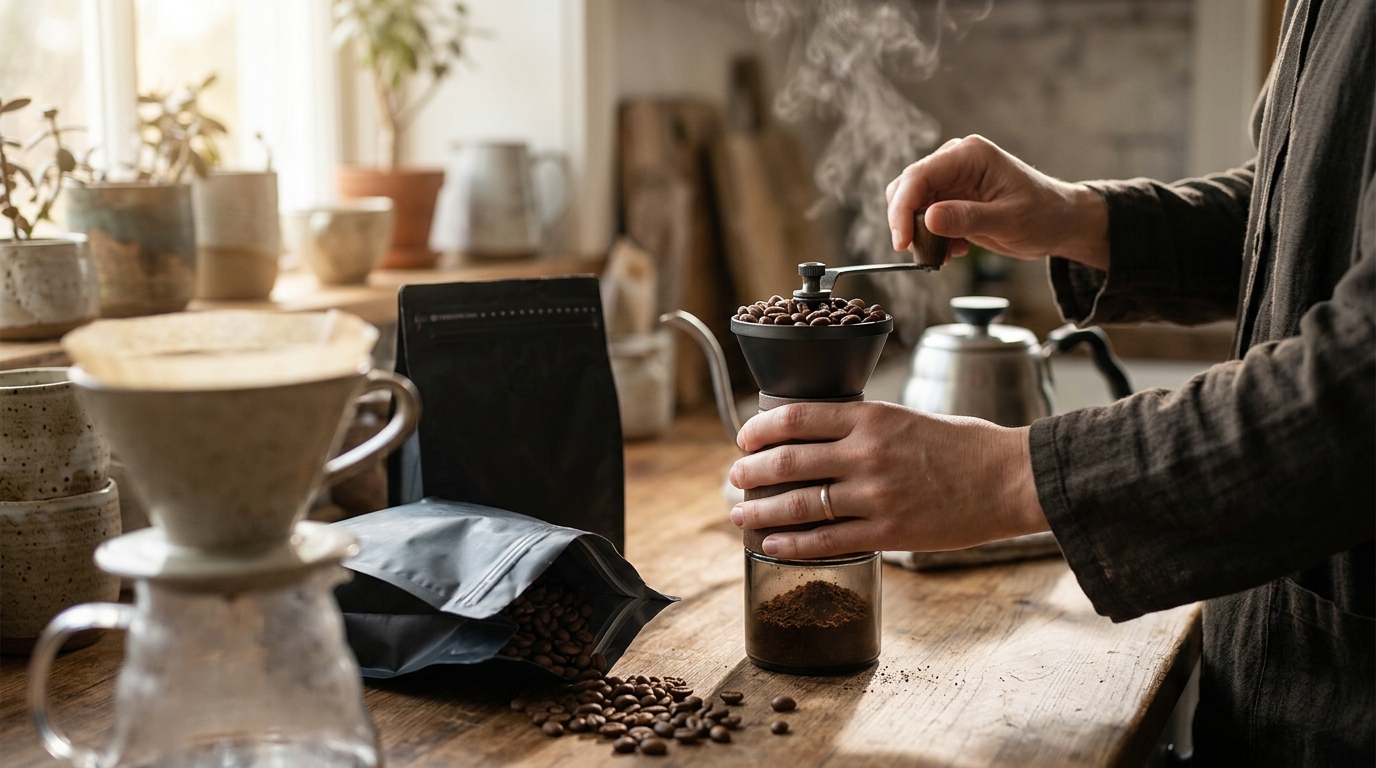
Coffee is more than just a morning ritual; it is a complex botanical product that demands respect for its chemical integrity. When you choose whole bean coffee, you are prioritizing the preservation of volatile aromatic compounds that degrade rapidly once exposed to air. According to industry data, coffee begins to lose its peak flavor profile within 15 minutes of grinding, making the decision to buy whole beans one of the most impactful choices for your daily caffeine experience.
What Is Whole Bean Coffee?
Whole bean coffee is the roasted seed of the Coffea plant, sold in its intact, unground state. Unlike pre-ground coffee, which has been mechanically processed to increase surface area, whole beans retain their natural protective shell until the moment of brewing. This structural integrity is the primary defense against oxidation, the chemical process that turns fresh, vibrant coffee into stale, flat-tasting liquid.
At Strong Coffee Company, we prioritize the integrity of the bean to ensure that every cup delivers the maximum potential of the roast. By keeping the bean whole, we preserve the essential oils and acids that define the coffee's character. This approach aligns with the growing trend of performance-driven individuals who view their coffee as fuel for cognitive and physical output.
The Freshness Factor
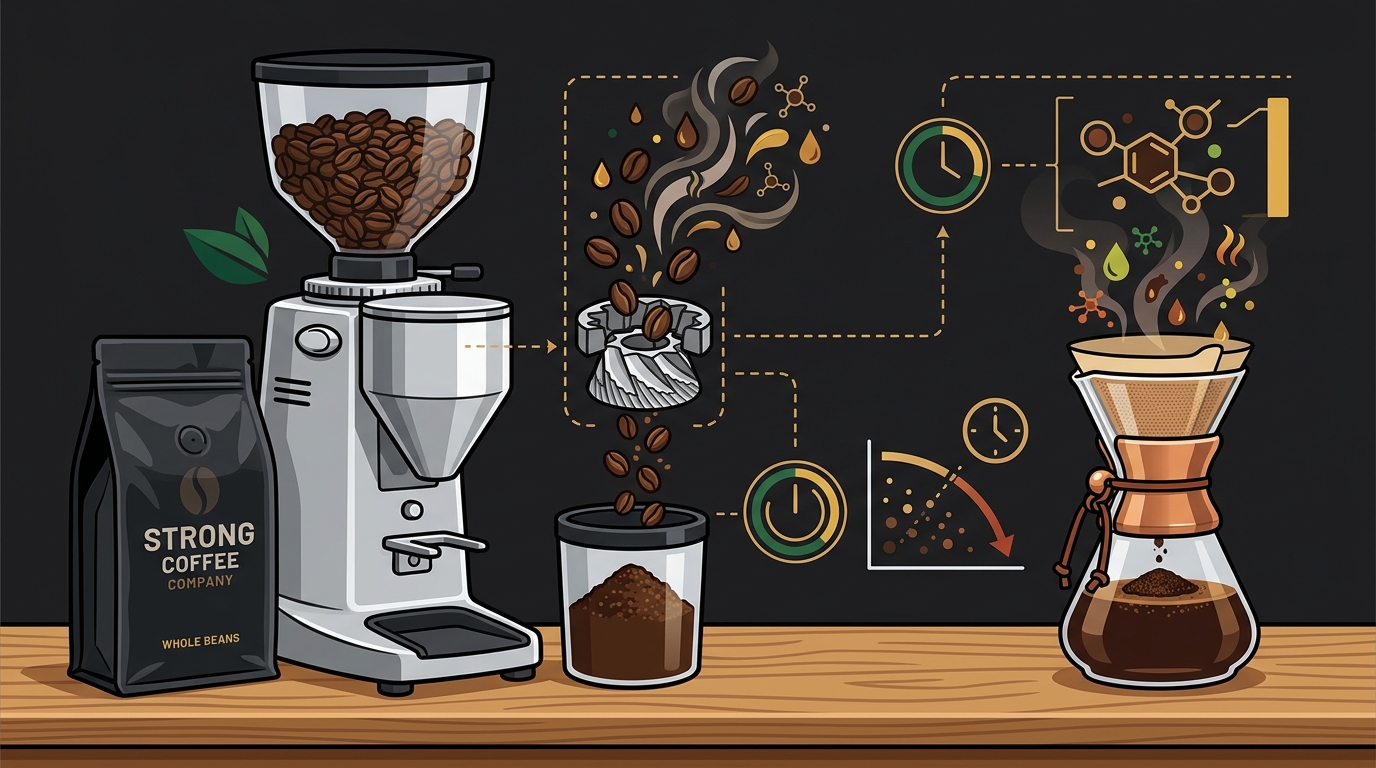
Freshness is the single most critical variable in coffee quality. Once a coffee bean is ground, its surface area increases exponentially, exposing it to oxygen, light, heat, and moisture. These elements accelerate the degradation of aromatic compounds. Research indicates that ground coffee loses approximately 60% of its volatile aromatics within just 15 minutes of grinding. By purchasing whole beans, you effectively pause this clock until you are ready to brew.
This preservation is vital for maintaining the nuanced notes of origin. Whether you are sourcing a single-origin Ethiopian Yirgacheffe or a robust Colombian blend, the freshness of the bean ensures that the subtle floral, fruity, or nutty notes remain intact. Explore our whole bean collection to experience the difference that immediate brewing makes.
Unlocking Complex Flavor Profiles
The primary benefit of whole bean coffee is the ability to customize the grind size to match your brewing method. Different extraction methods require different particle sizes to achieve optimal balance. For example, a French press requires a coarse grind to prevent over-extraction and sediment, while espresso demands a fine, compact grind to build pressure.
When you grind your own coffee, you control the extraction rate. This control allows you to highlight specific flavor notes that might be lost in pre-ground coffee, which is often ground to a medium consistency suitable for drip machines but suboptimal for other methods. Shop our full range of coffee products to find the perfect bean for your preferred brewing technique.
Health Benefits of Whole Bean Coffee
Beyond flavor, whole bean coffee offers significant health advantages. Coffee is rich in antioxidants, including chlorogenic acid, which helps combat oxidative stress in the body. However, the concentration of these beneficial compounds is heavily influenced by freshness. Stale coffee contains fewer active antioxidants and may have developed off-flavors that are less pleasant to consume.
Furthermore, whole bean coffee allows for greater control over caffeine intake. By adjusting the grind size and brew time, you can modulate the strength of your cup. This is particularly important for those who are sensitive to caffeine or are using coffee as a performance enhancer. Read our guide on functional coffee to understand how coffee fits into a high-performance lifestyle.
Cost Efficiency and Longevity
While whole bean coffee may sometimes carry a slightly higher price point than pre-ground alternatives, it often proves more cost-effective in the long run. Pre-ground coffee is often made from lower-quality beans that are less expensive to produce but degrade quickly. Whole beans, particularly those from specialty roasters, are often of higher quality and retain their value longer.
Additionally, buying in bulk or subscribing to a service can reduce the per-cup cost. Check out our coffee bundles for savings on premium whole bean selections. This approach ensures that you are not paying for the degradation of flavor that occurs in pre-packaged ground coffee.
Whole Bean vs. Ground Coffee
Understanding the differences between whole bean and ground coffee helps in making an informed decision. The table below summarizes the key distinctions.
| Feature | Whole Bean Coffee | Pre-Ground Coffee |
|---|---|---|
| Freshness | High (preserved until brewing) | Low (degrades rapidly after grinding) |
| Flavor Complexity | High (customizable grind) | Medium (fixed grind size) |
| Convenience | Low (requires grinder) | High (ready to brew) |
| Shelf Life | Long (weeks to months) | Short (days to weeks) |
Key Takeaways
- Whole bean coffee preserves volatile aromatics that are lost within 15 minutes of grinding.
- Grinding your own coffee allows for precise control over extraction and flavor profiles.
- Whole beans retain higher levels of antioxidants compared to stale pre-ground coffee.
- Customizable grind sizes optimize brewing for methods like espresso, French press, and pour-over.
- Premium whole bean offerings, such as those from Strong Coffee Company, support a high-performance lifestyle.
- Buying whole beans can be more cost-effective over time due to longer shelf life and higher quality.
Frequently Asked Questions
Is whole bean coffee better than ground coffee?
Yes, whole bean coffee is generally considered superior because it retains its freshness and flavor longer. Once ground, coffee begins to oxidize and lose its aromatic compounds rapidly.
How long does whole bean coffee stay fresh?
Whole bean coffee typically stays fresh for about 2 to 4 weeks after roasting if stored in an airtight container away from light and heat. Browse our fresh roasts to ensure you are getting the best quality.
Do I need a grinder for whole bean coffee?
Yes, you will need a coffee grinder to break down the beans. A burr grinder is recommended for consistent particle size, which is crucial for even extraction.
Can I store whole bean coffee in the freezer?
Yes, you can store whole bean coffee in the freezer, but it must be in an airtight container to prevent moisture absorption. Thaw the beans before opening to avoid condensation.
What is the best way to brew whole bean coffee?
The best brewing method depends on your taste preference. Espresso, pour-over, and French press are popular methods that highlight different aspects of the bean's flavor.
Why is whole bean coffee more expensive?
Whole bean coffee often costs more because it is of higher quality and requires careful handling and packaging to preserve freshness. View our bundle options for better value.
How do I know if my coffee is stale?
Stale coffee will have a flat, cardboard-like smell and lack the vibrant aroma of fresh beans. It will also taste bitter and acidic without complexity.
Start Your Journey
Experience the difference that fresh, whole bean coffee makes in your daily routine. Visit Strong Coffee Company to explore our premium selection of whole bean coffees, adaptogens, and accessories. Elevate your coffee game today.