

Whether you are stocking your kitchen, supplying an office, or launching a café, the coffee provider you choose shapes every cup that reaches your hands. A poor choice means inconsistent flavour, missed deliveries, and wasted money. A great choice means you never have to think twice about quality. This guide walks you through seven concrete criteria—backed by industry standards—so you can evaluate any coffee provider with confidence.
Why Your Coffee Provider Choice Matters More Than You Think
Your provider is not just a vendor—they are a partner whose decisions ripple through your daily experience or your bottom line. The beans they source, the way they roast, and how they ship directly determine what ends up in your cup. For businesses especially, a supplier affects reputation, operational efficiency, and customer satisfaction. As one industry resource puts it, the quality of your coffee can genuinely make or break your business.
Even home coffee enthusiasts benefit from applying the same rigour. Asking the right questions up front saves you from cycling through provider after provider in search of a reliable match.
Criterion 1 — Bean Quality and Grading Transparency
Quality should sit at the top of your evaluation. Before you commit to any provider, find out where they source their green coffee and whether they can articulate how those beans are graded.
Understand the SCA Scoring System
The Specialty Coffee Association (SCA) uses a 100-point scale that has become the industry standard for evaluating coffee's sensory characteristics. Specialty-grade coffee scores 80 points or above on this scale, while anything below 80 is considered commercial grade. A provider who references SCA scores or Q-grading demonstrates alignment with professional quality benchmarks.
Request Samples and Tasting Notes
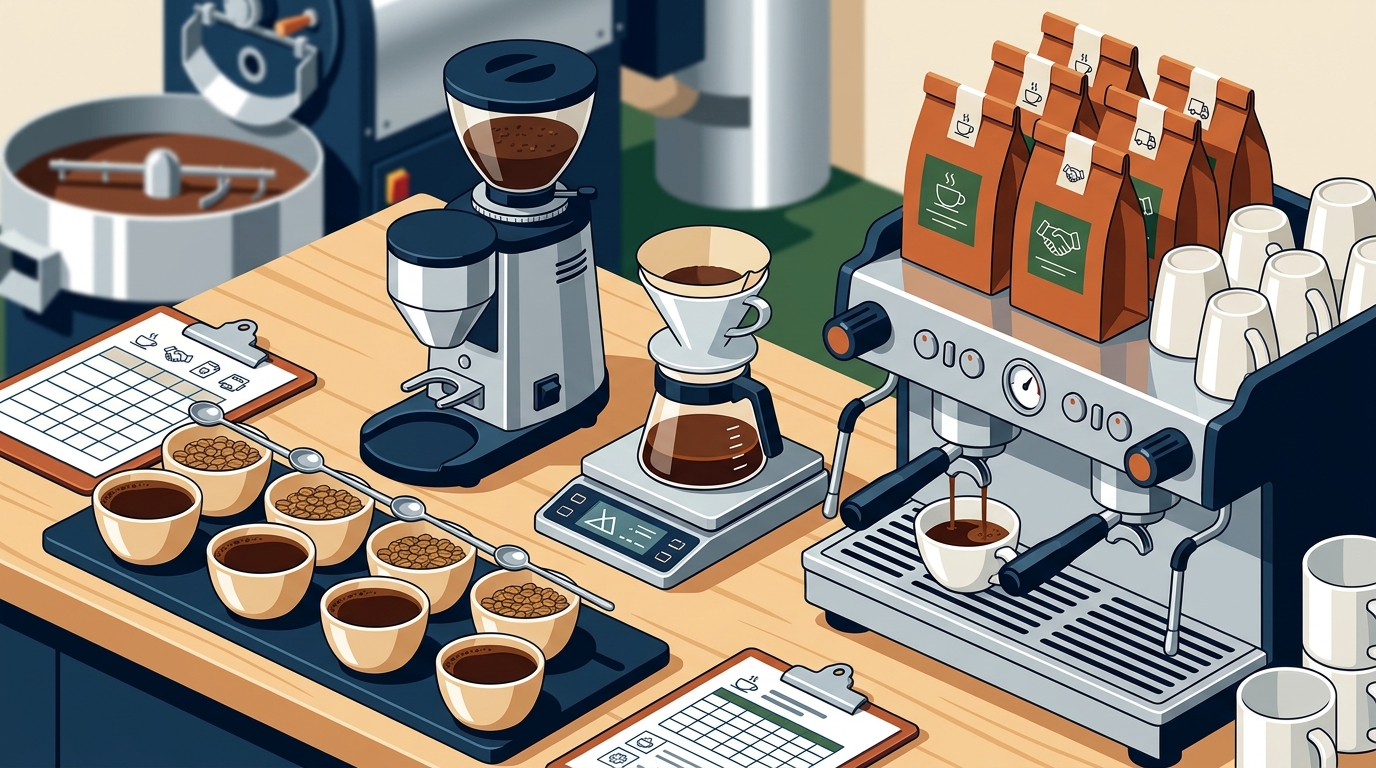
Any reputable provider should be willing to send you samples before you place a bulk order. During evaluation, pay attention to aroma categories—floral, fruity, herbal, earthy—and flavour notes such as citrus, chocolate, nutty, or spicy. Providers who list clear tasting notes for each offering show they have done their own cupping homework.
If you are new to evaluating coffee, look for acidity (how sharp or flat the brew feels on your tongue), body (the weight and texture in your mouth), and aftertaste (how long a pleasant finish lingers). A good quality coffee should have a pleasant and lasting aftertaste that prolongs the sensory experience.
Criterion 2 — Roast Freshness and Date Visibility
Freshness is non-negotiable. Coffee begins losing its most vibrant flavours within weeks of roasting, so you need a provider who discloses the roast date on every bag or shipment. Since fresh coffee tastes best, a supplier that withholds or obscures roast dates is a red flag.
What to Ask
- Do you print the roast date on every package?
- How many days after roasting do you typically ship?
- What is the recommended consumption window for your beans?
Providers who roast to order—meaning they do not roast until your order is placed—often deliver the freshest possible product. At Strong Coffee Company, for example, small-batch roasting ensures beans reach customers close to their peak flavour window.
Criterion 3 — Consistency Across Batches
A single great bag of coffee means nothing if the next shipment tastes different. Batch-to-batch consistency is one of the clearest indicators of a well-run roasting operation. A good coffee supplier should provide you with consistent batches—beans that are evenly roasted and deliver the same quality and same flavour profile every time.
How Reliable Providers Maintain Consistency
- Precision roasting equipment: Advanced roasters use tools like Agtron refractometers to measure the degree and uniformity of roast scientifically, rather than relying on visual checks alone.
- Documented quality control: Look for providers who perform moisture analysis, roast analysis, grind testing, and cupping on every production lot.
- Feedback loops: The best providers track lot data over time, comparing current batches against historical profiles and sending documented feedback to their sourcing partners.
Ask potential providers directly: what do you do to guarantee the consistency of your coffee? If they cannot give you a specific answer, keep looking.
Criterion 4 — Ethical Sourcing and Certifications
Modern coffee consumers—whether they are buying for personal use or for a business—increasingly care about how their beans were produced. Ethical sourcing is not just a feel-good checkbox; it often correlates with higher bean quality because responsible farming practices tend to produce better crops.
Certifications to Look For
- Fair Trade: Ensures farmers receive fair prices, work in safe conditions, and have access to community development funds. Fair Trade practices also tend to encourage better farming methods, which can lead to higher quality beans.
- Organic: Indicates the coffee was grown without synthetic pesticides or fertilisers, which benefits both the environment and flavour purity.
- Direct Trade: While not a formal certification, direct trade relationships mean the roaster purchases directly from farmers, which benefits the farmers' well-being and typically ensures a high-quality product.
- Rainforest Alliance / UTZ: Focus on sustainable farming and biodiversity preservation.
Traceability Questions
Do not hesitate to ask for traceability information, including details about the coffee's origin, processing methods, and handling throughout the supply chain. A trustworthy supplier will be transparent and open to these verification processes rather than treating your questions as an inconvenience.
Criterion 5 — Delivery Reliability and Logistics
Even the best coffee is useless if it arrives late, damaged, or inconsistently. Reliable and timely delivery is essential when choosing a provider. Before signing on, clarify the following:
- Shipping schedule: Do they ship on fixed days, or is fulfilment flexible? How quickly do orders typically arrive?
- Geographic reach: Where are their distribution centres? Closer facilities usually mean faster, fresher deliveries.
- Guarantees: What happens when a shipment is delayed or arrives damaged? Providers who proactively address these contingencies show operational maturity.
For subscription customers, look for providers that let you adjust frequency, pause shipments, or change blends without penalty—a sign that they prioritise long-term relationships over rigid contracts.
Criterion 6 — Customer Service and Communication
Good customer service is vital. Your supplier should be responsive, helpful, and easy to communicate with. This criterion is especially important during the early stages of a relationship, when you may need guidance on selecting roasts, adjusting order volumes, or troubleshooting brewing issues.
Green Flags
- They respond to enquiries within one business day.
- They offer educational resources—brew guides, cupping notes, origin stories.
- They proactively check in after your first few orders.
- They are willing to schedule a tasting call or send additional samples when you are exploring new offerings.
Red Flags
- Slow or canned responses to specific questions.
- No direct phone or chat support.
- Unwillingness to provide samples or references from existing customers.
Many specialty coffee roasters are more than willing to answer questions and provide samples. If a provider will not do that for you, it is a strong signal to move on to one who will.
Criterion 7 — Flexibility, Scalability, and Pricing Clarity
Your coffee needs today may not match your needs six months from now. A reliable provider should offer competitive pricing without sacrificing quality, along with flexible options that allow you to adjust orders as your needs change.
Pricing Transparency
Pricing should be transparent. Ask about their pricing models, and keep an eye out for any extra or hidden costs such as minimum-order surcharges, shipping fees on small orders, or penalties for changing delivery frequency.
Scalability
Whether you are a household ordering a bag every two weeks or a café processing dozens of kilograms a month, ensure that the supplier can handle your current needs and scale up as your consumption or business grows. Providers who offer tiered pricing or volume discounts demonstrate they are built to grow with you.
Quick Evaluation Checklist
Use this scorecard when comparing providers side-by-side. Rate each criterion from 1 (poor) to 5 (excellent).
| Criterion | Key Question | Score (1–5) |
|---|---|---|
| Bean Quality | Do they share SCA scores or grading info? | |
| Roast Freshness | Is a roast date printed on every package? | |
| Consistency | Can they describe their QC process? | |
| Ethical Sourcing | Do they hold certifications or offer traceability? | |
| Delivery | Are shipping timelines and guarantees clear? | |
| Customer Service | Did they respond quickly and helpfully? | |
| Flexibility & Pricing | Is pricing transparent with room to scale? |
Any provider scoring below 3 on more than two criteria warrants a closer look—or a search for alternatives.
Key Takeaways
- Quality is the top priority. Research consistently ranks bean quality as the single most important criterion when evaluating a coffee supplier—above price, delivery, and even taste preference.
- Always request samples. Tasting before committing protects you from surprises and shows you how seriously the provider takes their product.
- Consistency separates good providers from great ones. Ask specifically about quality-control processes, roast profiling, and batch tracking.
- Ethical sourcing benefits everyone. Fair Trade and direct-trade practices improve farmer livelihoods and often yield higher quality beans.
- Transparency is a trust signal. Providers who openly share roast dates, pricing structures, sourcing origins, and grading data are the ones worth building a relationship with.
- Communication matters from day one. A provider who is hard to reach before you become a customer will not get easier to reach after.
Frequently Asked Questions
What is the most important factor when choosing a coffee provider?
Bean quality is widely regarded as the most important criterion. Industry research using the Analytical Hierarchy Process method found that quality carried a priority weight of 45 percent in supplier evaluations—far above service (26 percent), taste (17 percent), price (7 percent), and delivery (5 percent). Start by requesting samples and verifying the provider's sourcing and grading standards.
How can I tell if a coffee provider uses high-quality beans?
Look for references to the SCA's 100-point scoring system. Specialty-grade coffee scores 80 points or above. Ask whether the provider employs certified Q-graders, and request cupping scores or tasting notes for the coffees you are considering. Providers who cannot or will not share this information may not prioritise quality.
Should I choose a local roaster or a large national supplier?
Both have advantages. Local roasters often deliver fresher beans with shorter shipping times and offer more personalised service. Larger suppliers may provide wider variety, equipment support, and volume discounts. The best choice depends on your priorities—freshness and relationship versus breadth and infrastructure.
Why does roast date matter so much?
Coffee is at its flavour peak within roughly two to four weeks after roasting. A provider who prints the roast date on every package shows they stand behind the freshness of their product. Avoid providers who list only a "best by" date far in the future, as this can mask stale inventory.
What certifications should I look for in a coffee provider?
Fair Trade, Organic, Rainforest Alliance, and Direct Trade are the most common. Fair Trade certification ensures that coffee farmers receive fair prices and work in safe conditions. Organic certification guarantees no synthetic chemicals were used. Direct Trade indicates the roaster has a personal relationship with the farmer, often resulting in higher quality and fairer compensation.
How do I evaluate a coffee provider's reliability before committing?
Read reviews from other customers, ask for references, and start with a small trial order. Pay attention to whether the provider delivers on time, packages carefully, and communicates proactively about any issues. A provider who is transparent during the vetting process is likely to stay that way once you are a customer.